

This article provides a Changpu ultrasonic machine supplier evaluation checklist trade show — a structured approach to evaluating ultrasonic equipment suppliers at exhibitions, drawing on Jiangsu Changpu Intelligent Technology's perspective as a factory-direct manufacturer. The checklist covers four evaluation dimensions: verifying manufacturing capability, assessing machine quality, evaluating supplier reliability, and identifying red flags. By following this framework, buyers can maximize the value of their trade show time and reduce the risk of selecting the wrong supplier.
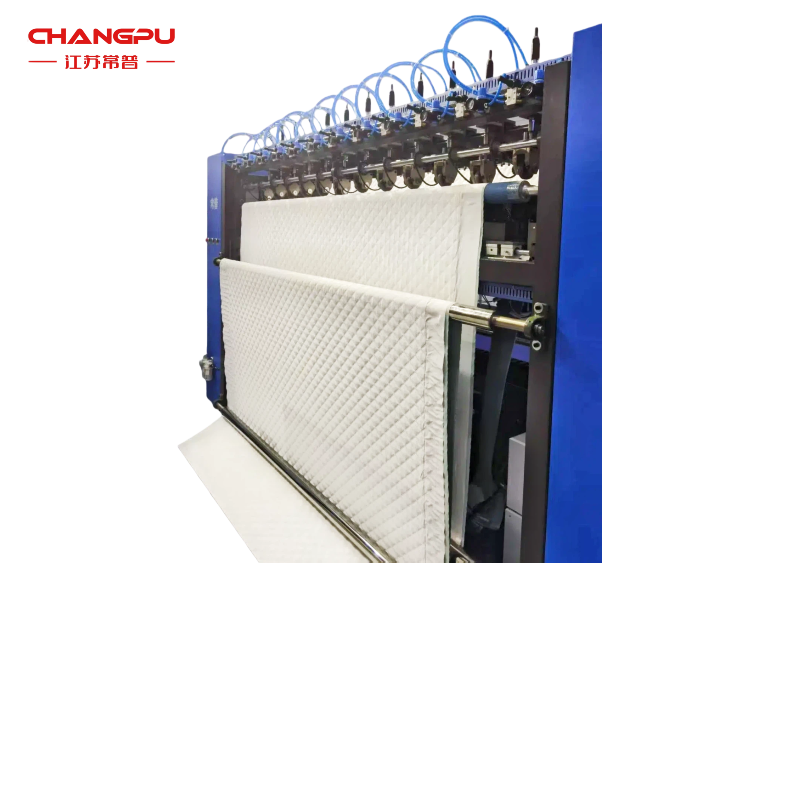
Dimension 1: Verify Manufacturing Capability
The single most important question to answer at a trade show is: does this supplier actually manufacture the equipment, or are they reselling machines made by someone else? Trading companies can offer polished presentations, but they introduce an intermediary layer that adds cost, slows communication, and diffuses accountability for quality.
Checklist Items:
Ask directly: "Where is your factory located?" A manufacturer will answer with a specific address without hesitation. A trading company will provide a vague response — "in Jiangsu Province" or "near Shanghai" — or deflect to discuss product features. Follow up with "Can I visit the factory tomorrow or the day after the show?" A manufacturer will say yes and begin making arrangements. A trading company will make excuses.
Ask: "What percentage of components do you machine in-house?" A manufacturer with in-house CNC capability will describe specific components they produce — "we machine the quilting rollers, the horn bodies, the frame mounting plates." A trading company or light assembler will describe purchasing components from suppliers and performing assembly only. Changpu, for example, machines ultrasonic horns, rollers, and structural components in-house — a fact that can be verified during a factory visit.
Ask: "Can you show me photos of your production floor from last week?" Not the polished photos on the brochure — ask to see recent photos on the salesperson's phone. A manufacturer's phone will have dozens of recent factory photos showing machines in various stages of assembly, workers on the production floor, and real — not staged — factory conditions. A trading company's representative will have only the same brochure photos you have already seen.
Ask: "How many machines of this model did you produce last month?" A manufacturer with active production will know the number — or can check it quickly. A trading company will give a vague answer or an implausibly large number. Specific production volumes are difficult to fabricate convincingly.
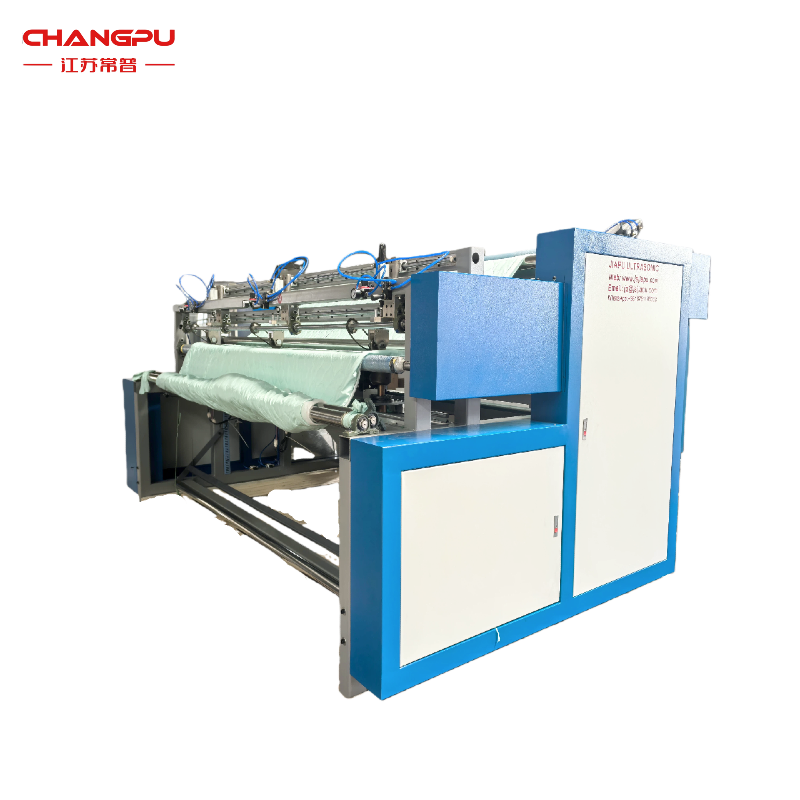
Dimension 2: Assess Machine Quality
The machine on display at the booth is the supplier's best example of their work — if the exhibition machine has quality issues, the machines in your order will almost certainly be worse. Use the opportunity to inspect the machine in detail.
Checklist Items:
Examine build quality: Look at the welds on the frame — are they smooth and consistent? Look at the paint or powder coating — are there runs, thin spots, or overspray? Look at the fasteners — are they all the same type and grade, or a random assortment suggesting whatever was available was used? Look at the cable management — are wires neatly routed in conduits and cable chains, or hanging loose? Build quality is difficult to fake. A machine that looks well-made at the detail level was built by people who care about quality.
Request a live demonstration: Ask to see the machine run with material — not the material the supplier chose for the demonstration, but material similar to what you will use. If you brought material samples, ask if they can run a test with your material. Observe the machine's operation: does it start smoothly, run consistently, and stop without drama? Is the ultrasonic generator stable, or does the frequency display fluctuate? Does the material feed evenly, or is there bunching and misalignment?
Inspect output samples: Ask for samples produced during the demonstration — ideally pieces taken at the beginning, middle, and end of the run. Inspect bond quality (consistent across the width?), dimensional accuracy (measure with a ruler if available), and edge quality (clean cuts without fraying or melting?). If the supplier only offers pre-made samples and will not produce fresh ones on the spot, ask why.
Examine the control system: Is the HMI responsive and logically organized? Can the operator easily access key parameters — speed, ultrasonic amplitude, temperature, production count? Is there recipe storage for different product configurations? A poorly designed control interface suggests the machine's electrical engineering may also be substandard.
Ask about CE certification: If the supplier claims CE certification, ask to see the certificate. Verify that it covers the specific machine model you are evaluating, that it was issued by a recognized notified body, and that it is current (not expired). A supplier that is evasive about showing the certificate may not actually hold it.
Dimension 3: Evaluate Supplier Reliability
A machine that works well at the exhibition is only valuable if the supplier can deliver it on time, support it after the sale, and remain a reliable partner for years to come. These factors are harder to evaluate in a brief booth visit but not impossible.
Checklist Items:
Ask about lead times: "If I place an order today, when will the machine ship?" A manufacturer who controls production will give a specific answer — "4 weeks for a standard configuration, 6 weeks with OEM modifications" — and can explain what drives the timeline. A trading company will give an optimistic answer that may not reflect reality because they do not control the upstream factory's schedule.
Ask about after-sales support: "If I have a technical problem six months from now, who do I contact and how quickly will they respond?" Evaluate the specificity of the answer. "We have a technical support team available by email and WhatsApp, response within 24 hours, with escalation to engineering if needed" is credible. "Don't worry, we will support you" is not.
Ask about spare parts: "What are the most common wear parts for this machine, what is their typical service life, do you stock them, and what is the lead time for parts not in stock?" A credible supplier will name specific parts — "the ultrasonic horn lasts approximately 2 million cycles, the cutting blade needs sharpening every 100,000 cuts, we stock both and ship within 3 days" — and will have a spare parts list available for review.
Ask for references: "Can you provide contact information for a customer in my region who has been using this machine for at least six months?" Not every supplier will share customer contacts — confidentiality agreements are common in B2B — but the reaction to the question is informative. A manufacturer with satisfied customers will offer to contact a reference and ask if they are willing to speak with you. A supplier with no satisfied customers will deflect.
Observe the booth team: Is the booth staffed by people who can answer technical questions in detail, or only by salespeople who refer every question to someone else? Are the technical staff present and engaged, or hiding in the back? The quality of the people representing the company at the exhibition is a proxy for the quality of the company itself.
Dimension 4: Identify Red Flags
Some supplier characteristics should immediately raise concern. These red flags do not necessarily mean a supplier is fraudulent, but they warrant deeper investigation before proceeding.
Checklist Items:
Red Flag: Unusually low pricing. If a supplier's price is 30-40% below other suppliers for a seemingly equivalent machine, something is different — cheaper components, omitted features, or a business model that does not include quality control or after-sales support. Industrial machinery is a competitive market; prices cluster around a market level. Extreme outliers are almost never bargains.
Red Flag: Reluctance to discuss the factory. Any hesitation, vagueness, or deflection when factory-related questions are asked is a strong indicator that the supplier is not a manufacturer. A factory is a manufacturer's primary asset — they are proud of it and eager to show it.
Red Flag: Inconsistent specifications. If the specifications on the brochure, the specifications quoted verbally, and the specifications on the machine's nameplate do not agree, the supplier either does not know their own product or is deliberately misrepresenting it. Either way, proceed with extreme caution.
Red Flag: Pressure to place an order immediately. "Special show price, today only" is a consumer retail tactic, not a B2B industrial equipment practice. Legitimate equipment suppliers understand that procurement decisions take time and involve multiple stakeholders. High-pressure sales tactics are a red flag.
Red Flag: Cannot explain how the technology works. If the person at the booth cannot explain the basic operating principle of ultrasonic bonding — how the generator produces high-frequency electrical energy, how the transducer converts it to mechanical vibration, how the vibration creates friction and heat at the bond point — they are likely a sales intermediary without technical knowledge. This does not necessarily mean the machine is bad, but it means the person you are talking to cannot provide reliable technical guidance.
Using the Checklist: A Practical Approach
The Changpu ultrasonic machine supplier evaluation checklist trade show is designed to be used systematically. A practical approach for a buyer visiting multiple suppliers is:
Conclusion
Trade shows compress months of supplier research into days of concentrated evaluation, but extracting full value from that compression requires a structured approach. The how to select ultrasonic equipment manufacturer China factory checklist presented here — verifying manufacturing capability, assessing machine quality, evaluating supplier reliability, and identifying red flags — provides that structure.
For B2B buyers visiting trade shows where Jiangsu Changpu buyer guide verify supplier quality reliability is a priority, applying this checklist systematically will separate genuine manufacturers from trading intermediaries, identify machines that meet quality expectations, and highlight suppliers with the organizational maturity to support a long-term procurement relationship. The time invested in structured evaluation at a trade show is repaid many times over in reduced risk and better procurement outcomes.