
For many B2B buyers, a standard machine is a starting point, not a final answer. Production facilities differ in floor space, power supply, raw material specifications, output targets, and operator skill levels. A machine designed for one factory's conditions may need adjustments to work optimally in another's. Furthermore, many buyers — particularly regional distributors, equipment dealers, and brands building their own product portfolios — need machines manufactured under their own branding rather than the factory's. These buyers require a supplier that offers genuine OEM and ODM manufacturing, not just a label swap.
Jiangsu Changpu Intelligent Technology provides Changpu OEM ultrasonic machine custom manufacturing services that go beyond cosmetic changes. This article examines the scope of Changpu's customization capabilities, the OEM/ODM process from inquiry to delivery, and why factory-direct custom manufacturing offers advantages that trading intermediaries cannot match.
Understanding OEM vs ODM in Ultrasonic Equipment
Before examining Changpu's specific capabilities, it is important to distinguish between OEM and ODM as they apply to industrial machinery — the terms are often used loosely, but they describe different levels of supplier involvement.
OEM (Original Equipment Manufacturing) refers to manufacturing a machine to the buyer's specifications under the buyer's brand. The buyer provides the design, specifications, or a reference machine, and Changpu manufactures to those requirements with the buyer's logo, color scheme, and branding on the finished equipment. The intellectual property — the machine design, the specification — belongs to or is directed by the buyer.
ODM (Original Design Manufacturing) refers to Changpu using its existing machine designs as a base and modifying them according to the buyer's requirements. The core engineering comes from Changpu, but the machine is adapted — dimensions, features, modules, branding — to meet the buyer's specific needs. The machine may carry the buyer's brand, while the underlying design IP remains with Changpu.
Changpu offers both models, and in practice, many projects blend elements of both. A buyer might start with a Changpu-designed sanitary napkin production line, request dimensional modifications to fit their facility, add a packaging module from Changpu's product catalog, and have the entire line branded with their company logo — a combination of ODM adaptation and OEM branding.
Customization Dimensions: What Can Be Modified
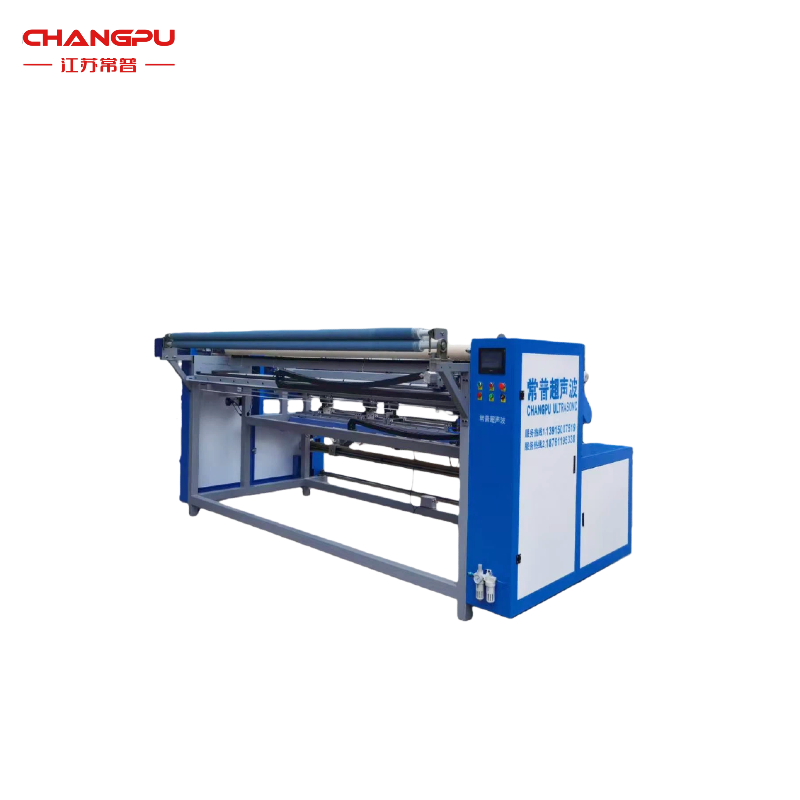
The Jiangsu Changpu Intelligent Technology ODM solutions scope covers multiple dimensions of machine customization:
Branding and Appearance — The most visible form of customization. Changpu can apply the buyer's logo, brand name, and color scheme to machine frames, control panels, and packaging. Control panel HMI screens can be programmed with the buyer's brand on the startup screen. Machine nameplates carry the buyer's company information and model designation. This branding customization is critical for distributors who want to build brand recognition in their regional markets.
Machine Dimensions and Layout — Factory floor plans vary, and a machine that fits one facility may not fit another. Changpu can modify machine frame dimensions — length, width, height — within engineering limits to accommodate the buyer's available floor space. For production lines, module layout and orientation can be adjusted to fit the buyer's material flow. Conveyor infeeds and outfeeds can be reconfigured to integrate with existing upstream or downstream equipment.
Electrical Configuration — Export markets have different power standards. Changpu configures machines for 220V/50Hz, 220V/60Hz, 380V/50Hz, 110V/60Hz, and other regional voltage and frequency combinations. Motor specifications, transformer ratings, and control system power supplies are selected accordingly. The HMI interface language — English, Spanish, French, Arabic, or other languages — is configured during production.
Material Compatibility — Different buyers process different materials. A non-woven shorts machine might need to handle 20 GSM material for one buyer and 40 GSM for another. An ultrasonic quilting machine might bond polyester fabric for one application and polypropylene non-woven for another. Changpu adjusts ultrasonic parameters — frequency, amplitude, pressure, speed — and mechanical settings — roller gap, feed tension, guide width — to optimize performance for the buyer's specific materials.
Functional Module Configuration — Many of Changpu's production lines are modular. A sanitary napkin production line can be configured with or without an automatic folding module, with or without a packaging module, and with or without a stacking and counting module. A tape cutting machine can be configured for cold-knife or hot-knife operation, or both. Buyers select the modules they need, and Changpu integrates them into a single coordinated machine.
Automation Level — Buyers in markets with lower labor costs may prefer semi-automatic operation with manual material loading and product collection. Buyers in high-labor-cost markets may require fully automatic operation with automatic feeding, in-line inspection, and automated stacking. Changpu can configure the same base machine platform for different automation levels, adding or removing servo-driven feeding systems, sensor-based inspection stations, and robotic stacking modules as required.
The Custom Machine Development Process
The journey from an OEM/ODM inquiry to a delivered custom ultrasonic equipment supplier factory direct machine follows a structured process:
Step 1 — Requirements Definition: The buyer provides detailed specifications — target product, output per hour or per minute, raw material type and dimensions, facility constraints (space, power, compressed air), branding requirements, and any special features or modifications needed. Where possible, the buyer shares material samples for Changpu to test.
Step 2 — Engineering Assessment: Changpu's engineering team evaluates the requirements against the existing machine platform. They identify which specifications can be met through standard configuration, which require modification, and which are outside engineering feasibility or would require ground-up custom design. This assessment results in a technical proposal that confirms feasible specifications, notes any limitations, and provides a preliminary timeline and cost estimate.
Step 3 — Design and Approval: For modifications beyond standard configuration, Changpu's engineering team creates design drawings, electrical schematics, and control logic diagrams showing the customizations. These are shared with the buyer for review and approval. The approval milestone is critical — it confirms that both parties have the same understanding of what will be built before manufacturing begins.
Step 4 — Manufacturing and Testing: The machine is manufactured according to the approved design, with the same six-gate quality control process applied to standard machines. Customized aspects receive additional inspection attention — for example, if the machine dimensions have been modified, the dimensional inspection at Gate 2 includes verification of the custom dimensions. Operational testing at Gate 5 uses the buyer's material samples to validate that the machine performs as specified with the buyer's actual raw materials.
Step 5 — Pre-Shipment Verification: Before packaging, Changpu provides photos or video of the completed machine, showing the branding, configuration, and any customized features. For significant custom projects, a live video walkthrough with the buyer's technical team allows remote verification that all specifications have been met.
Step 6 — Documentation and Shipping: The machine ships with documentation reflecting the custom configuration — a machine manual specific to the buyer's machine, a spare parts list identifying custom components, and installation and commissioning instructions tailored to the configured modules and options.
OEM for Regional Distributors and Equipment Dealers
One of the primary use cases for Changpu OEM ultrasonic machine custom manufacturing services is the regional distributor or equipment dealer who wants to sell ultrasonic machinery under their own brand. The business model is straightforward: the distributor develops market presence in their region through local sales, service, and spare parts support. Buying OEM machines from Changpu allows them to offer their own branded equipment without investing in their own R&D and manufacturing infrastructure.
For these buyers, Changpu provides:
Complete OEM branding — logo, color scheme, model naming under the buyer's nomenclature
Exclusive or semi-exclusive distribution rights for specified geographic territories or customer segments
Technical training for the distributor's service team to handle installation, commissioning, and first-line maintenance
Spare parts packages configured for the distributor's expected service volume
Marketing support materials — machine photos without Changpu branding, specification sheets in editable formats, and product demonstration videos — for the distributor to use in their own marketing
This OEM distributor model is a strategic growth channel for Changpu, as it enables market penetration in regions where a Chinese factory's direct sales presence would be impractical. For the buyer, it offers a path to equipment brand ownership without the capital investment and technical complexity of building a manufacturing operation.
Why Factory-Direct OEM Beats Trading Company Custom Orders
Buyers seeking customized ultrasonic equipment have two sourcing paths: work with a factory directly, or work through a trading company that acts as an intermediary. While trading companies can offer convenience — English communication, consolidated logistics, multi-product sourcing — they introduce significant disadvantages for custom manufacturing.
When a buyer works through a trading company on a custom machine order, the communication chain becomes three-party: buyer to trading company, trading company to factory engineer, factory engineer to trading company, trading company to buyer. Each hop introduces potential for misunderstanding, delay, and specification drift. A dimension that the buyer requests, the trading company translates, and the factory interprets may not be exactly what the buyer intended.
When a buyer works with a custom ultrasonic equipment supplier factory direct like Changpu, the communication is two-party and direct. The buyer's technical team discusses specifications with Changpu's engineers. Design drawings go directly from Changpu to the buyer for approval. Test results are shared without intermediary filtering. The elimination of the middle layer reduces errors, accelerates decision-making, and gives the buyer full visibility into the manufacturing process.
Additionally, factory-direct OEM pricing reflects manufacturing cost plus margin, without the additional layer of trading company markup. For custom machinery in the USD 10,000 to USD 50,000 range, this price difference is substantial.