
Drawing on market intelligence from Jiangsu Changpu Intelligent Technology's global customer base and industry analysis, this article identifies five key trends shaping the Changpu disposable hygiene product machinery industry trends 2026 landscape. Each trend carries implications for equipment selection, production strategy, and competitive positioning.
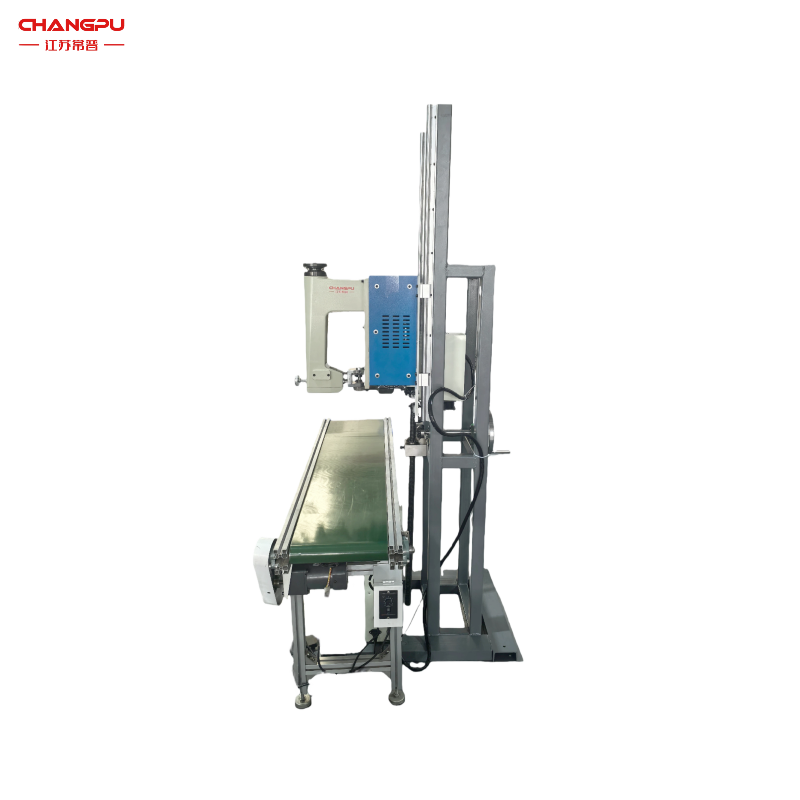
Trend 1: Ultrasonic Technology Becoming the Default Standard
The migration from glue-based and stitch-based manufacturing to ultrasonic bonding is accelerating across the hygiene products industry. What was once a niche technology for specific applications is becoming the default choice for new production line investments.
The drivers of this shift are well-established: ultrasonic bonding eliminates adhesive consumable costs, reduces machine warm-up time, produces softer and more comfortable products, and enables higher production speeds. In 2026, these advantages are being amplified by two additional factors.
First, the cost of hot-melt adhesives — the primary alternative to ultrasonic bonding — has increased due to petrochemical feedstock price volatility. Adhesive is a recurring operational cost that scales linearly with production volume. Ultrasonic bonding's zero-consumable model becomes more financially attractive as adhesive costs rise.
Second, sustainability pressures are pushing manufacturers toward mono-material product designs — products made from a single type of material that can be more easily recycled than multi-material composites. Ultrasonic bonding supports mono-material design because it welds material to itself without introducing a foreign bonding agent (adhesive) into the product structure. A pad bonded ultrasonically can, in principle, be fully recycled as a single polymer stream. A pad bonded with hot-melt adhesive introduces a contaminant that complicates recycling.
For equipment buyers, the implication is clear: investing in glue-based production technology in 2026 is a decision that may look outdated within 3-5 years. Ultrasonic equipment from manufacturers like Changpu represents the technology direction that the industry is converging on.
Trend 2: Automation Intensity Increasing Across All Machine Categories
Automation in hygiene product machinery is not new, but the intensity of automation — the degree to which machines operate autonomously with minimal human intervention — is increasing rapidly. This trend in ultrasonic equipment market development automation sustainability is being driven by three forces:
Labor Cost Escalation: In markets that have traditionally relied on low-cost labor for material handling, quality inspection, and packaging — including China itself — wages are rising faster than productivity. A machine that requires three operators is becoming significantly more expensive to run than a machine that requires one, independent of the machine's purchase price.
Labor Availability Constraints: In many manufacturing locations, the issue is not just labor cost but labor availability. Younger workers are increasingly reluctant to take factory production jobs, creating recruitment challenges that automation solves by reducing headcount requirements.
Quality Consistency Demands: Institutional buyers — hospital groups, hotel chains, government health agencies — are imposing tighter quality specifications with statistical process control requirements. Automated inspection and rejection systems deliver the consistency that manual inspection cannot match.
Changpu's product development reflects this trend. The company's newer machine models incorporate features that were optional or unavailable just three years ago: automatic material splicing for continuous roll changes without stopping the machine, in-line vision inspection systems that detect and reject defective products, automatic stacking and counting with robotic palletizing integration, and IoT connectivity that transmits production data to factory management systems.
For equipment buyers, the trend toward higher automation means that the specification gap between a semi-automatic machine and a fully automatic machine is widening — not just in price, but in capability and long-term competitiveness. A machine purchased today with minimal automation may face an unfavorable labor cost comparison within its service life.
Trend 3: Sustainability Moving from Marketing to Manufacturing Reality
Sustainability in the disposable products industry has historically been more visible in marketing claims than in manufacturing reality. In 2026, this is changing as regulatory pressure, retailer requirements, and consumer expectations converge to force genuine changes in how products are designed and manufactured.
The EU's Single-Use Plastics Directive and extended producer responsibility schemes are creating compliance requirements that flow upstream to manufacturing equipment. Products must be designed for recyclability. Manufacturing processes must minimize waste. Energy consumption and carbon footprint are becoming part of the equipment selection criteria for buyers supplying environmentally regulated markets.
For Jiangsu Changpu Intelligent Technology market analysis forecast purposes, the sustainability trend has several implications for equipment:
- Ultrasonic bonding supports mono-material product design, as noted above. Equipment buyers serving EU markets should prioritize ultrasonic over glue-based technology.
- Material waste reduction features — precision feeding, scrap minimization, edge trim recycling — are moving from "nice to have" to "must have" as waste disposal costs rise and waste reduction targets become contractual requirements.
- Energy efficiency of production equipment is becoming a specification criterion. Changpu's ultrasonic generators incorporate energy-saving features including automatic standby mode and power factor correction.
- Machine documentation — including energy consumption data, material efficiency metrics, and waste generation data — is increasingly requested by buyers who need to report sustainability metrics to their own customers.
Trend 4: Emerging Markets Driving Volume Growth
While developed markets in North America, Western Europe, and Japan represent high-value but slow-growth demand for hygiene products, the volume growth driving equipment purchases is concentrated in emerging markets — Southeast Asia, South Asia, Africa, the Middle East, and Latin America.
Several structural factors are converging in these markets: rising disposable incomes enabling consumers to shift from cloth to manufactured hygiene products, expanding retail distribution (supermarkets, pharmacies, e-commerce) making products accessible to populations previously served only by informal markets, government health initiatives promoting hygiene product use, and import substitution policies encouraging domestic manufacturing.
For equipment suppliers, this means the buyer profile is shifting. The typical new production line customer in 2026 is more likely to be a first-time manufacturer in an emerging market than a capacity expansion by an established multinational. These buyers have different needs: more guidance on production process design, stronger preference for remote installation and training support, higher sensitivity to total cost of ownership over purchase price, and interest in modular equipment that allows them to start with basic production and add automation as volumes grow.
Changpu's experience serving buyers in Vietnam, Indonesia, Nigeria, Kenya, and Brazil has shaped the company's approach to emerging market customers — including detailed installation documentation, video-guided commissioning support, and modular machine configurations that accommodate phased investment.
Trend 5: Supply Chain Regionalization Reshaping Production Geography
The global supply chain disruptions of 2020-2023 accelerated a trend that was already underway: the regionalization of hygiene product manufacturing. Rather than concentrating production in a few low-cost countries and shipping finished products globally, manufacturers are establishing production facilities in or near their target markets.
This regionalization is driven by several factors: shipping cost volatility making long-distance logistics less predictable, import duties and trade barriers incentivizing local production, shorter lead times enabling faster response to market demand changes, and national industrial policies in many countries offering incentives for domestic manufacturing.
For equipment buyers, supply chain regionalization creates both opportunities and challenges. The opportunity is that local production can be cost-competitive even with higher labor costs when freight, duties, and supply chain risk are factored in. The challenge is that smaller, regional-scale factories need equipment that is efficient at lower volumes than the mega-factories that previously dominated production.
Changpu's equipment portfolio is well-suited to this trend. The company's machines are designed for flexible production — size changes, material changes, and product changes can be accomplished quickly — rather than being optimized for a single product running at maximum volume indefinitely. This flexibility aligns with the needs of regional manufacturers serving diverse local markets.
What These Trends Mean for Equipment Buyers
Synthesizing the five Changpu disposable hygiene product machinery industry trends 2026, the following guidance emerges for B2B equipment buyers:
- Choose ultrasonic over glue-based technology — It is the direction the industry is moving, and the consumable cost advantage will compound over the machine's service life.
- Invest in automation upfront — The labor cost and availability trends suggest that under-automating today will create competitive disadvantage within a few years. Modular automation that can be upgraded incrementally is a practical compromise.
- Prioritize waste reduction and energy efficiency — These are not just environmental metrics; they are cost metrics that will become contractually relevant as sustainability requirements harden.
- Select equipment designed for flexibility — In a regionalizing production landscape, the ability to produce multiple products and change over quickly is more valuable than maximum volume of a single product.
- Partner with a manufacturer that supports emerging market buyers — If your production facility is in a developing economy, choose an equipment supplier with demonstrated experience in remote support, detailed documentation, and modular configurations.