

Non-woven fabric is the invisible backbone of modern disposable product manufacturing. From the surgical cap worn in an operating room to the shoe cover protecting a cleanroom floor, from the disposable shorts provided at a luxury spa to the toilet seat cover in an airport restroom — non-woven products are everywhere, produced in staggering volumes, and almost entirely taken for granted by the people who use them.
Behind this ubiquity is a specialized category of manufacturing equipment: non-woven product machinery. As a Changpu non-woven disposable product machinery manufacturer factory, Jiangsu Changpu Intelligent Technology produces a comprehensive range of machines that convert rolls of non-woven fabric into finished disposable products through automated cutting, folding, ultrasonic bonding, and packaging. This article provides a detailed examination of each machine category, its production process, and the market applications it serves.
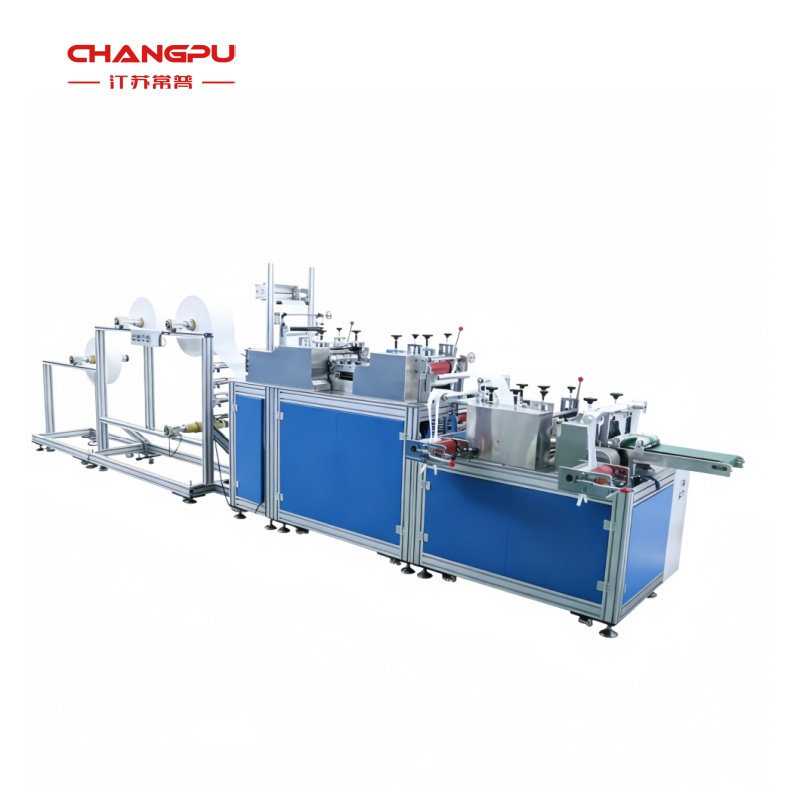
The Non-Woven Material Foundation
Before examining the machinery, it is useful to understand the material these machines process. Non-woven fabric is a sheet or web structure bonded together by entangling fibers mechanically, thermally, or chemically — rather than by weaving or knitting. The most common types used in disposable product manufacturing are:
Spunbond Polypropylene (PP) Non-Woven — The workhorse material for disposable products. Lightweight (typically 10-60 GSM), breathable, water-resistant, and economical. Used for surgical caps, shoe covers, isolation gowns, and disposable shorts.
Meltblown Polypropylene Non-Woven — Finer fiber structure than spunbond, providing superior filtration and barrier properties. Used as the middle filtration layer in surgical masks and respirators.
SMS (Spunbond-Meltblown-Spunbond) Composite — A tri-layer material combining the strength of spunbond outer layers with the filtration of a meltblown inner layer. Used for surgical gowns, isolation gowns, and high-protection disposable garments.
Thermally Bonded Non-Woven — Fibers bonded by heat and pressure rather than chemical binders, producing a softer hand feel. Used for products requiring skin contact comfort, such as bouffant caps and disposable underwear.
Changpu's non-woven machinery is designed to process these materials in the 10-60 GSM range, with specific models optimized for specific material types and GSM weights.
Bouffant Cap Machine: The High-Volume Workhorse
The bouffant cap — also known as a surgical cap, doctor cap, or shower cap — is one of the highest-volume disposable non-woven products globally. Hospitals, pharmaceutical cleanrooms, food processing facilities, and electronics manufacturing cleanrooms consume millions of bouffant caps daily.
Changpu's bouffant cap machine is a fully automatic production line that converts non-woven roll stock into finished, individually counted bouffant caps. The process flow includes:
Material Unwinding: Single or dual rolls of non-woven fabric (typically 20-30 GSM spunbond PP) are unwound under controlled tension.
Ultrasonic Bonding: The cap's gathered edge is formed by ultrasonic bonding, which creates the elasticated rim that holds the cap on the wearer's head. The ultrasonic bond is continuous and strong, eliminating the thread stitching or adhesive that less advanced machines require.
Cutting and Shaping: The bonded material is cut into individual caps. The cutting system is synchronized with the bonding station to ensure consistent cap dimensions.
Automatic Counting and Stacking: Finished caps are counted into pre-set quantities (typically 50 or 100 pieces per stack) and stacked for packaging.
Optional Packaging Integration: For buyers requiring fully packaged output, an automatic bagging module can be integrated to pack counted stacks into PE bags.
The Jiangsu Changpu bouffant cap shorts shoe cover machine line achieves production rates of 60-120 caps per minute depending on the model. For a manufacturer operating a single 8-hour shift, this translates to approximately 28,000 to 57,000 caps per day — sufficient volume to serve regional hospital supply contracts, cleanroom consumable distributors, or export markets.
Disposable Shorts Machine: Meeting Hospitality and Medical Demand
Disposable non-woven shorts serve two primary markets: medical/surgical settings where patients change into disposable garments before procedures, and hospitality settings — spas, hotels, resorts — where disposable shorts are provided as part of treatment or amenity packages.
Changpu's non-woven shorts machine is designed for material in the 20-40 GSM range and produces finished shorts in sizes from S to XL, with automatic size adjustment. The production process includes:
Material Feeding: Non-woven roll stock is fed into the machine with automatic tension control. The machine can be configured for single-color or two-color production — for example, white shorts with a blue waistband.
Elastic Band Integration: Elastic material is fed into the waistband and leg openings. The ultrasonic bonding system simultaneously attaches the elastic while cutting and sealing the edge, creating a finished opening with integrated elastic — all in a single operation.
Side Seam Bonding: The shorts are formed by ultrasonic bonding of the side seams. Unlike stitched seams that create perforations and potential tear points, the ultrasonic bond creates a seam as strong as the surrounding material.
Cutting and Separation: Individual shorts are separated from the continuous web. The cutting system is synchronized with the bonding stations to maintain consistent dimensions.
Automatic Stacking and Counting: Finished shorts are stacked and counted for packaging. The machine's intelligent counting system includes jam detection and auto-stop to prevent miscounts and material waste.
Changpu offers multiple shorts machine models, including the standard non-woven shorts machine and the automatic size-adjustable boxer shorts machine. All models feature PLC control with HMI interface, recipe storage for different sizes and material combinations, and CE-certified safety systems. Unit price: approximately USD 20,000.
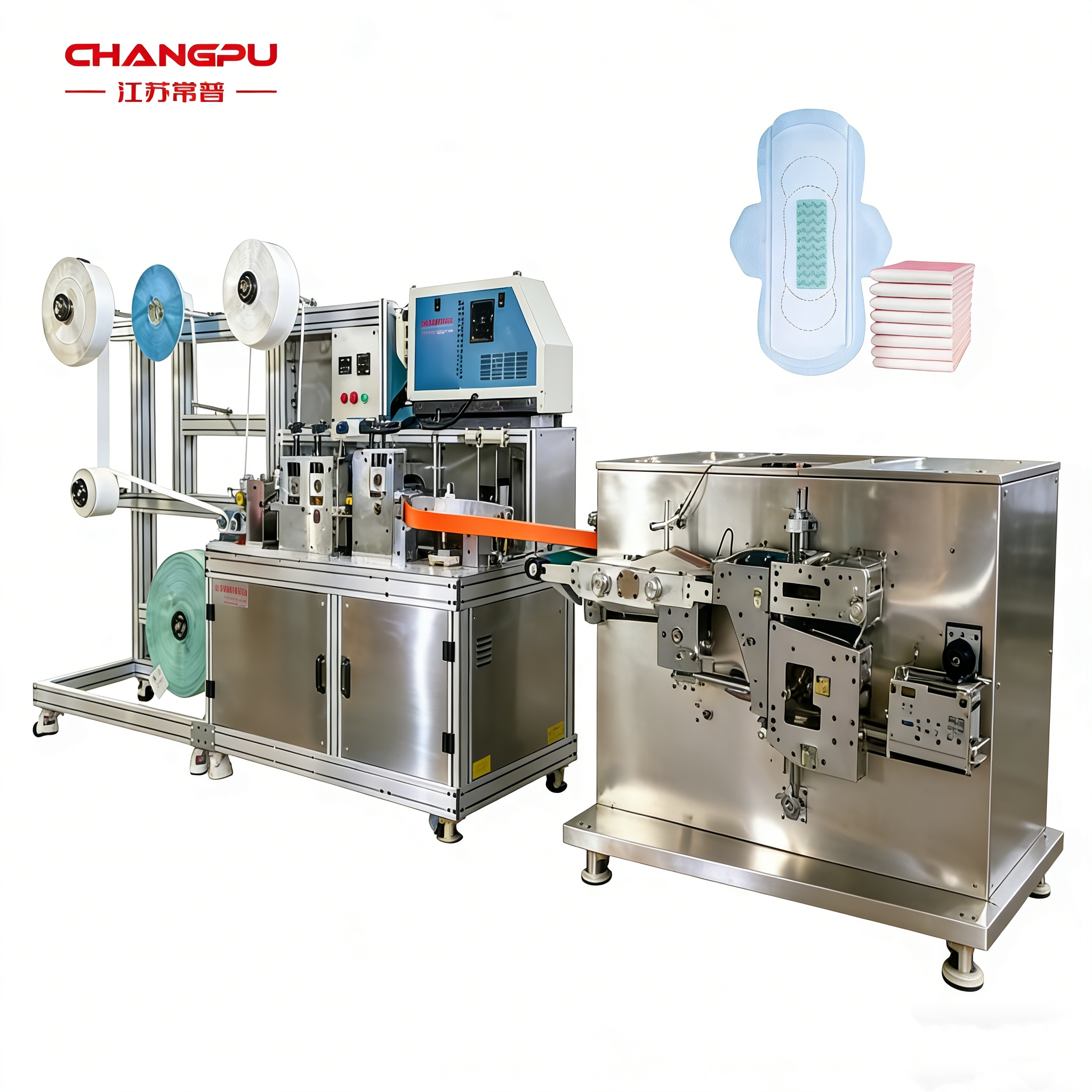
Shoe Cover Machine: Cleanroom and Medical Footwear
Disposable shoe covers serve a critical contamination control function in cleanrooms, hospital operating rooms, pharmaceutical manufacturing facilities, and electronics assembly areas. They are also used in residential settings by service professionals — painters, cleaners, home inspectors — who need to protect clients' floors.
Changpu's shoe cover making machine automates the production of non-woven shoe covers with elastic openings. The process includes:
Material Feeding: Non-woven roll stock is fed into the forming section. The material is folded and positioned to create the shoe cover shape.
Elastic Integration: Elastic material is fed and ultrasonically bonded to the shoe cover opening, creating a secure fit around the wearer's shoe or boot.
Ultrasonic Seam Bonding: The shoe cover perimeter is sealed ultrasonically, creating strong seams without stitch holes that would compromise the contamination barrier.
Cutting: Individual shoe covers are separated from the continuous web.
Collection: Finished shoe covers are collected for counting and packaging.
The shoe cover market value proposition for manufacturers is strong: shoe covers are consumable items with consistent reorder demand from institutional buyers. A single hospital may use thousands of shoe covers per day across its operating rooms and clean areas. For manufacturers supplying this demand, the automation and throughput of a dedicated shoe cover machine represents a significant efficiency advantage over manual or semi-automatic production methods.
Toilet Seat Cover Machine: The High-Value Niche
The disposable toilet seat cover machine represents Changpu's highest-value single machine at USD 40,000 to USD 50,000 — and for good reason. The product is more complex than a cap or shoe cover, and the production process involves more stations and tighter tolerances.
Disposable toilet seat covers are used in public restrooms, airports, hotels, hospitals, and commercial buildings. The product consists of a shaped non-woven or tissue paper sheet with a die-cut center opening and a flap that hangs into the toilet bowl to anchor the cover.
Changpu's toilet seat cover machine automates this multi-step production process:
Material Unwinding: Non-woven or tissue roll stock is unwound into the forming section.
Die Cutting: The outer shape and center opening are die-cut in a single station. The die tooling is precision-machined to produce clean cuts without tearing or rough edges.
Flap Forming: The center flap is formed and folded into position. This station requires precise mechanical timing to ensure the flap is correctly positioned relative to the cover body.
Folding: The finished cover is folded to compact dimensions for packaging. The folding mechanism handles the delicate material without creasing or tearing.
Counting and Stacking: Folded covers are counted into pre-set quantities and stacked for packaging.
The toilet seat cover market is characterized by consistent institutional demand — airports, hotel chains, and facility management companies purchase covers by the pallet load. For manufacturers, the market entry barrier is the specialized production equipment, which limits competition and supports favorable pricing.
Tie-On Mask Machine: Surgical Face Mask Production
The tie-on surgical mask machine produces the flat, rectangular face masks with tie straps (rather than ear loops) that are used in surgical settings. These masks are typically constructed from 2-4 layers of non-woven and meltblown material.
Changpu's fully automatic tie-on mask machine includes:
Multi-Layer Material Feeding: Up to 4 rolls of material — typically outer non-woven layer, one or two meltblown filtration layers, and inner non-woven layer — are fed simultaneously.
Nose Wire Insertion: A bendable nose wire is inserted between the outer layers and secured in position.
Ultrasonic Layer Bonding: The multiple layers are bonded together using ultrasonic welding. The bond pattern creates the mask's structural integrity and the pleat fold lines.
Pleat Forming: The bonded material is pleated to create the expandable mask body. Pleating allows the flat mask to expand and conform to the wearer's face when opened.
Tie Strap Attachment: Tie straps — typically non-woven strips — are attached at the four corners of each mask. The attachment is by ultrasonic welding.
Cutting and Separation: Individual masks are separated from the continuous web.
Collection: Finished masks are collected for counting and packaging.
Output rate: 60-100 masks per minute depending on the number of layers and configuration. Unit price: USD 5,000 to USD 6,000.
Why Buyers Choose Changpu for Non-Woven Machinery
As an automatic non-woven hygiene product equipment supplier China, Changpu offers several advantages that are particularly relevant to non-woven product manufacturers:
Single-Supplier Convenience — A buyer setting up a multi-product disposable products factory — producing caps, shorts, shoe covers, and masks — can source all the equipment from one manufacturer. This simplifies procurement, shipping logistics, installation coordination, and after-sales support.
Technology Consistency — All Changpu non-woven machines use the same ultrasonic bonding technology, the same PLC control platform, and similar HMI interfaces. Operators trained on one machine can transition to another with minimal additional training.
Spare Parts Commonality — Many components — ultrasonic generators, transducers, PLC modules, sensors — are common across machine models. This reduces the spare parts inventory a buyer needs to maintain and simplifies maintenance management.
Factory-Direct Pricing — As a Changpu non-woven disposable product machinery manufacturer factory, Changpu sells directly without trading company markup, offering competitive pricing on machines ranging from USD 5,000 (mask machine) to USD 50,000 (toilet seat cover machine).