

The textile manufacturing industry is undergoing a quiet but significant transformation. Traditional needle-and-thread quilting — a process that has remained fundamentally unchanged for over a century — is being challenged by an alternative technology that is faster, cleaner, and capable of producing results that conventional methods cannot match. That technology is ultrasonic quilting.
Changpu ultrasonic quilting machine non-woven fabric technology represents the forefront of this shift. As a leading Jiangsu Changpu quilting equipment manufacturer China factory, the company has developed a range of flat-head ultrasonic quilting machines that replace thread-based stitching with molecular-level bonding, creating seamless, durable, and aesthetically distinctive quilted products. This article explains how ultrasonic quilting works, what advantages it offers over traditional methods, and where this technology is being applied across industries.
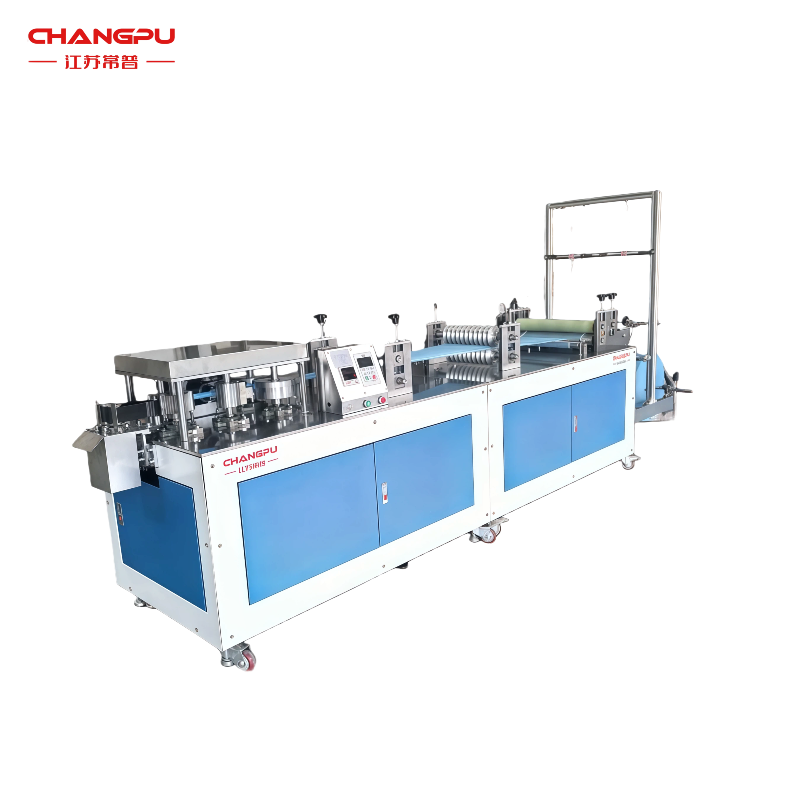
The Science Behind Ultrasonic Quilting
At its core, ultrasonic quilting is a welding process — but instead of heat generated by an external source, it uses high-frequency mechanical vibration to create molecular friction within the material itself. The key components of the system are the ultrasonic generator, the transducer (converter), the booster, and the quilting horn or roller.
The process begins with the ultrasonic generator converting standard electrical power (50/60 Hz) into high-frequency electrical energy — typically 15 kHz, 20 kHz, or 35 kHz depending on the application. This high-frequency electrical signal is fed to the transducer, which uses piezoelectric ceramic elements to convert the electrical energy into mechanical vibration at the same frequency. The booster amplifies this vibration and transmits it to the quilting horn or roller, which is the tool that contacts the material.
When the vibrating horn presses multiple layers of thermoplastic material — typically non-woven polypropylene, polyester, or blended fabrics — the mechanical vibration creates intense friction at the interface between the layers. This friction generates localized heat precisely at the bonding points, melting the thermoplastic fibers at those points. When the vibration stops, the melted material solidifies almost instantly under pressure, creating a permanent molecular bond. The entire cycle — vibrate, melt, solidify — takes a fraction of a second per bond point.
Because the heat is generated internally within the material rather than applied externally, there is no thermal degradation of surrounding fabric, no burn marks, and no need for cooling time between bond points. The machine can operate continuously at high speed, bonding material as fast as it can be fed through.
Key Advantages Over Traditional Thread Quilting
The ultrasonic quilting bonding process industrial textile applications offer several compelling advantages that are driving adoption across multiple industries:
Speed and Throughput — Ultrasonic quilting operates at significantly higher line speeds than needle-and-thread quilting because there is no thread to break, no bobbin to change, and no needle to replace. A Changpu ultrasonic quilting machine can run continuously at production speeds that would require multiple conventional quilting machines to match. For high-volume manufacturers, this throughput advantage translates directly into lower per-unit production cost.
No Consumables — Traditional quilting consumes thread — a recurring cost that adds up significantly over high-volume production runs. Thread also requires inventory management: sourcing, storing, and handling multiple thread types, colors, and qualities. Ultrasonic quilting eliminates thread consumption entirely. The only "consumable" is the ultrasonic horn or roller, which has a service life measured in millions of cycles and is replaced as a maintenance item rather than a production consumable.
Seamless Appearance — Ultrasonic quilting creates a quilted pattern without visible stitching on either side of the fabric. The bond is internal — the layers are fused together at the molecular level — resulting in a smooth, flat surface with no raised thread lines. This seamless appearance is particularly valued in next-to-skin garments, high-end bedding, and automotive interiors where stitching lines would be aesthetically undesirable or physically uncomfortable.
No Needle Holes — Needle-and-thread quilting inherently creates perforations in the fabric — thousands of needle holes through which thread passes. These holes compromise the barrier properties of the material. For products that need to be water-resistant, windproof, or impermeable to down filling, needle holes are a functional weakness. Ultrasonic quilting creates no perforations, preserving the barrier properties of the bonded fabric.
Pattern Flexibility — The quilted pattern on an ultrasonic machine is determined by the engraving on the quilting roller or horn. Changing the pattern is as simple as changing the roller. This allows manufacturers to offer multiple quilted patterns — diamond, square, parallel line, custom logo — from the same machine platform, enabling product differentiation without additional capital equipment.
Material Versatility — Changpu ultrasonic quilting machines can bond a wide range of thermoplastic materials and material combinations: polyester non-woven to polyester non-woven, polypropylene non-woven to polypropylene non-woven, polyester fabric to polyester wadding, and multi-layer sandwiches of different materials. As long as the materials contain thermoplastic content (typically 50% or more), ultrasonic bonding is feasible.
Industrial Applications of Ultrasonic Quilting
The versatility of Changpu ultrasonic quilting machine non-woven fabric technology has led to adoption across a diverse range of industries:
Apparel and Outdoor Wear — Winter jackets, insulated vests, and outdoor sleeping bags use quilted construction to hold insulating fill material in place and prevent it from migrating or clumping. Ultrasonic quilting creates the compartmentalized structure without needle holes that would allow fill leakage or water penetration. Down-filled jackets, in particular, benefit from ultrasonic quilting because the seamless bonds prevent down feathers from escaping through stitch holes.
Home Textiles and Bedding — Mattress covers, mattress protectors, pillow covers, and quilted bedspreads use ultrasonic quilting for both functional and decorative purposes. The quilted pattern secures multiple layers — a top fabric, a wadding or foam layer, and a backing fabric — into a unified composite material that is then cut and sewn into the final product. The seamless finish is valued in premium bedding products where visible stitching would detract from the aesthetic.
Mattress Ticking and Upholstery — The mattress industry is a major consumer of quilted fabric composites. Ultrasonic quilting bonds the decorative top fabric to layers of foam and backing material, creating the finished ticking that wraps the mattress core. The high-speed, continuous operation of ultrasonic quilting machines is well-suited to the mattress industry's volume requirements.
Automotive Interiors — Car seat covers, door panel inserts, headliners, and trunk liners increasingly use quilted and embossed fabric composites. Ultrasonic quilting provides the durability required for automotive applications — vibration resistance, temperature cycling tolerance, and abrasion resistance — while enabling the patterned aesthetics that automotive designers specify.
Medical and Hygiene Products — Quilted absorbent pads for medical and hygiene applications use ultrasonic bonding to create multi-layer structures that combine fluid distribution layers, absorbent cores, and waterproof backings. The absence of stitch holes is critical for these products, as perforations would create leakage paths.
Picnic Mats and Outdoor Products — Quilted picnic mats, camping mats, and outdoor cushions use ultrasonic bonding to laminate a decorative top layer to a foam or wadding middle layer and a waterproof bottom layer. The waterproof integrity of the bottom layer is preserved because ultrasonic bonding does not puncture it.
Changpu's Ultrasonic Quilting Machine Portfolio
As a Jiangsu Changpu quilting equipment manufacturer China factory, the company offers a range of flat-head ultrasonic quilting machines designed for different material widths, throughput requirements, and application types. Key features across the product line include:
Frequency Options: Machines are available in 15 kHz, 20 kHz, and 35 kHz configurations. Lower frequencies (15-20 kHz) provide higher power for thicker materials and faster speeds. Higher frequencies (35 kHz) provide finer control for delicate materials and detailed patterns.
Working Width: Standard machines accommodate material widths from 1.2 meters to 2.6 meters, with custom widths available for specialized applications.
Pattern Rollers: Interchangeable engraved rollers enable quick pattern changes. Standard patterns include diamond, square, parallel line, and wave designs. Custom patterns — including logos and proprietary designs — can be engraved on order.
Control System: PLC-based control with HMI touchscreen interface allows operators to set and monitor bonding speed, ultrasonic amplitude, roller pressure, and temperature. Recipe storage enables quick changeover between different material and pattern combinations.
Safety Features: Emergency stop circuits, guard interlocks, and ultrasonic generator protection systems ensure operator safety and machine reliability.
Pricing for Changpu ultrasonic quilting machines starts at approximately USD 10,000, varying with working width, automation features, and customization.

Why Manufacturers Are Making the Switch
The decision to transition from traditional quilting to ultrasonic technology is driven by a combination of operational and commercial factors. Manufacturers who have adopted Changpu ultrasonic quilting machine non-woven fabric technology report:
Reduced operating cost due to elimination of thread consumption and reduced needle replacement frequency
Increased throughput due to higher line speeds and elimination of thread-break stoppages
Improved product quality due to consistent bond strength and elimination of skipped stitches
Expanded product capability due to the ability to quilt materials and patterns that cannot be produced with needle-and-thread methods
Reduced maintenance due to fewer moving parts and consumable-replacement tasks
For B2B buyers evaluating equipment investments, these factors combine to produce a compelling return on investment calculation, particularly for manufacturers running high-volume production lines where even small per-unit cost savings multiply into significant annual savings.
Conclusion
Ultrasonic quilting technology represents a fundamental advance in how multi-layer fabric composites are manufactured. By replacing mechanical stitching with molecular bonding, the ultrasonic quilting bonding process industrial textile applications deliver higher speed, lower operating cost, seamless aesthetics, preserved barrier properties, and pattern flexibility — all from a single machine platform.
As Jiangsu Changpu Intelligent Technology continues to develop its Changpu ultrasonic quilting machine non-woven fabric technology, the range of materials, patterns, and applications accessible to ultrasonic bonding continues to expand. For textile manufacturers, apparel brands, automotive suppliers, and hygiene product producers, Changpu's ultrasonic quilting machines offer a proven path to higher productivity and product differentiation in an increasingly competitive global market.